Mother of pearls
Web + pigment prints (and monochrome carbon pigment prints) on paper, variable number and dimensions · 2025– (ongoing)
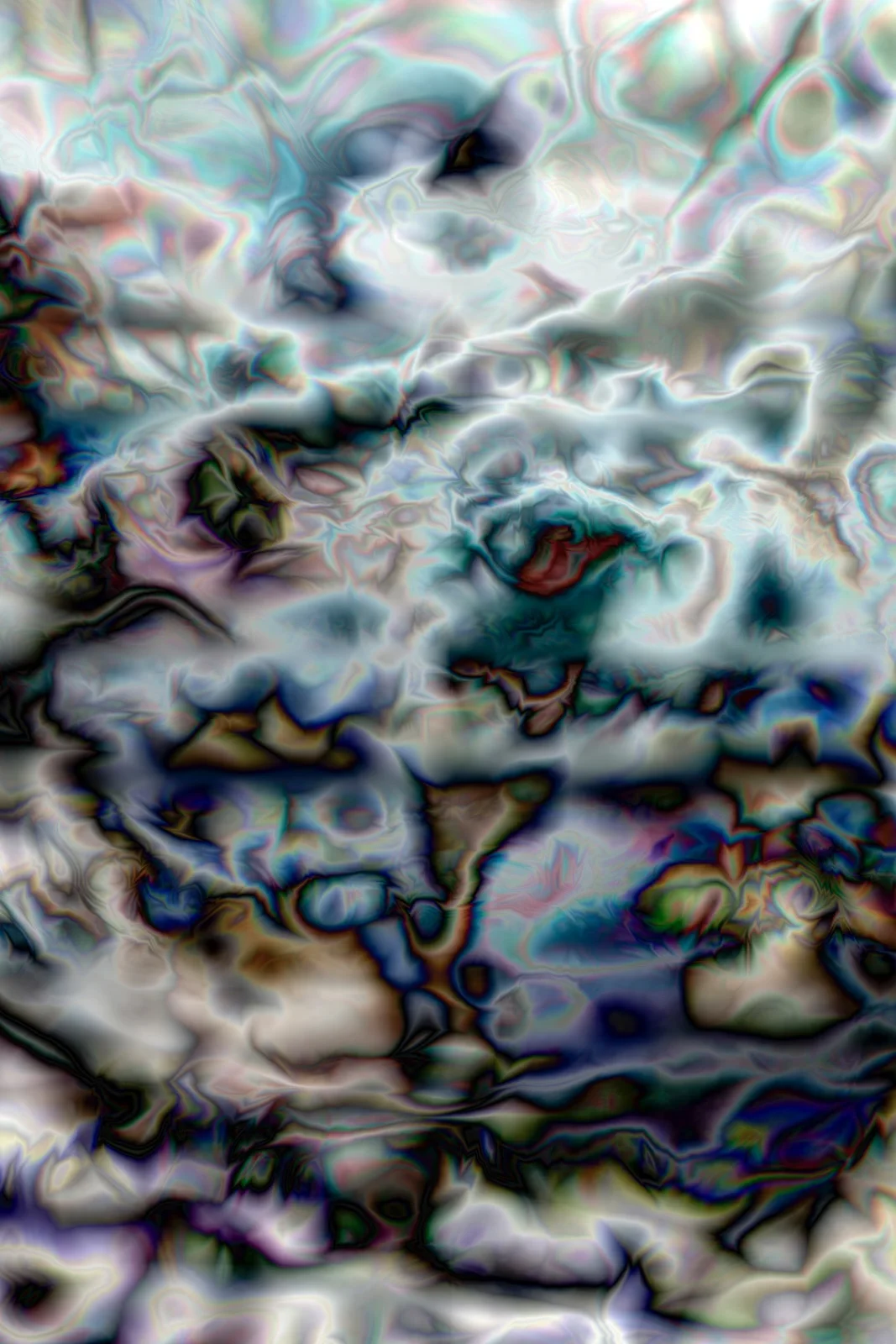
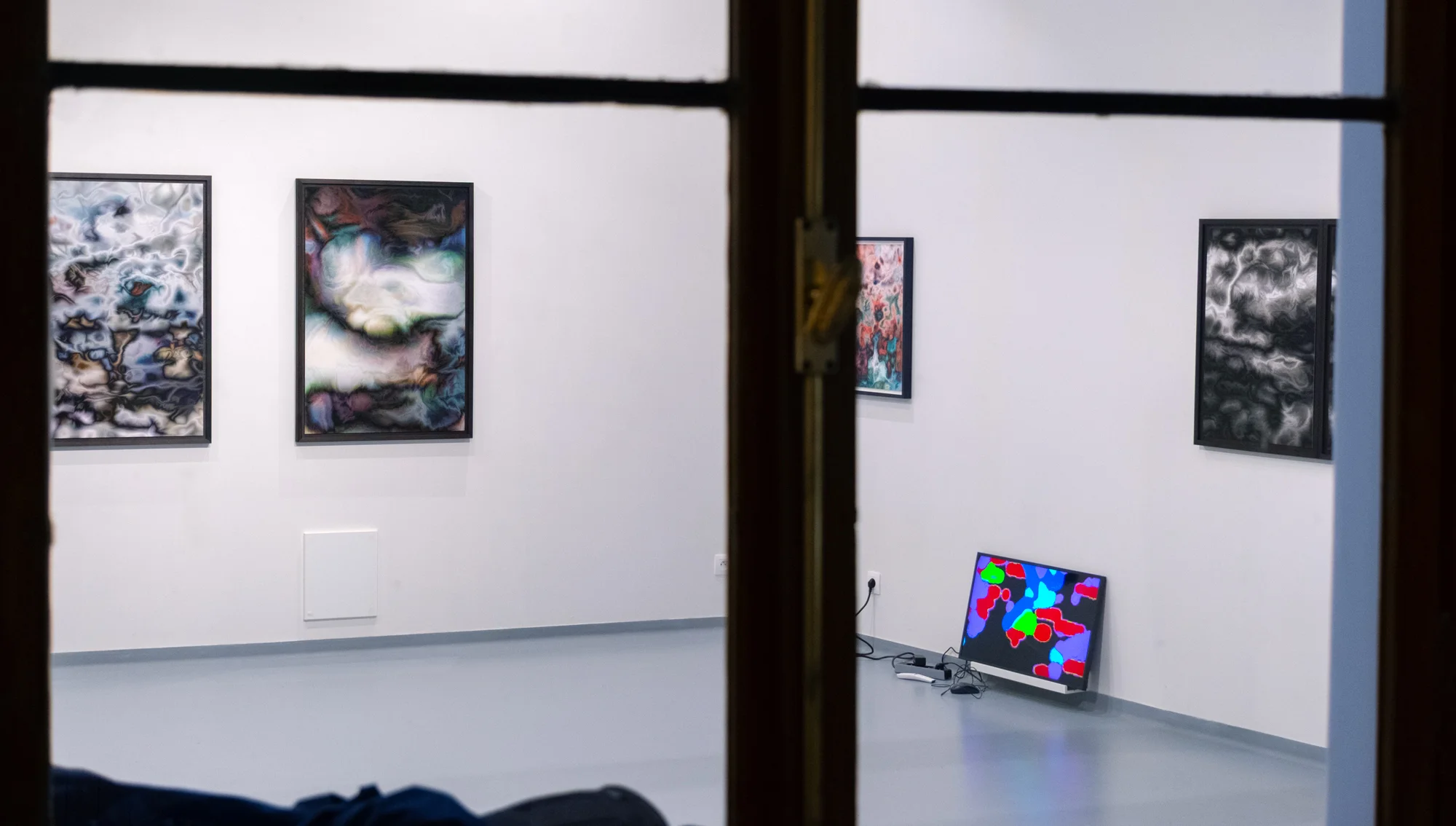
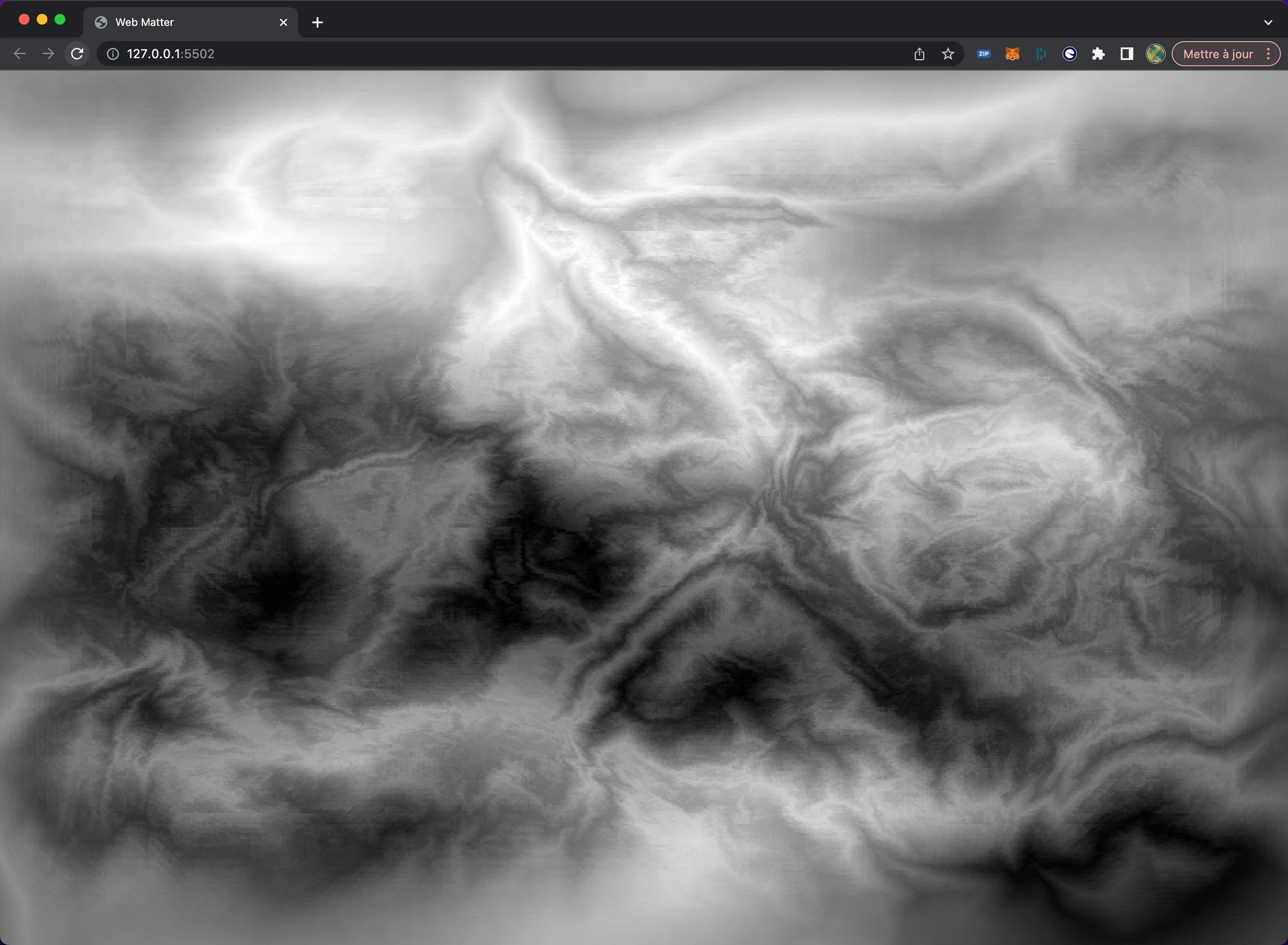
Mother of pearls explores the way the browser, with its admittedly limited means, can manipulate images: twist, blend, tear, soften, dissolve them, and so on.
In many ways, and all the more so as I write them down, these actions remind me of the ones Richard Serra listed  Serra famously said, Drawing is a verb. In Verblist, he compiled a series of what he called actions to relate to oneself, material, place, and process. in 1967. Although this is digital material, the same processes are at work. And at the heart of it all lies a confrontation between human and material, and a need to transform it. Very often, the images that come out of this research evoke physical matter (minerals, chalk, silk…) or certain physical or cosmic phenomena. It is this closeness that interests me.
The title refers to nacre, mother-of-pearl, a material that literally brings to light its iridescent properties  Fuel on water creates a thin film that interferes with light, producing different colours. This phenomenon is called iridescence. (CC BY 4.0, photo Mariojan photo) , obtained by superimposing very thin protective layers (as if to help us swallow reality) that interact with light. Here, it is by layering many images and programmatically applying successive filters to them that the browser comes to produce images of this kind.
Like other projects of mine, this one stretches over several years. The images on this page, however, all date from the last few months.
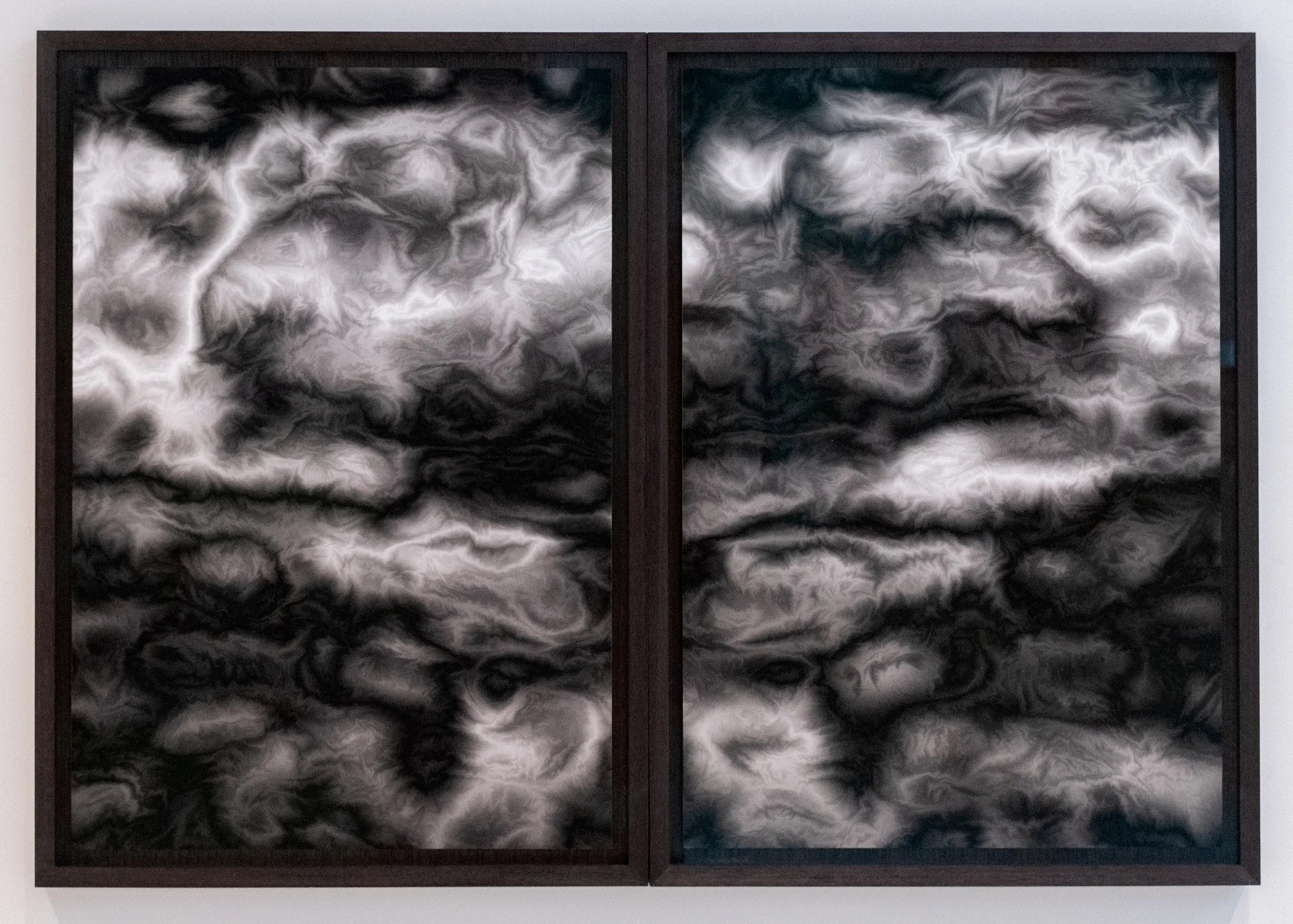
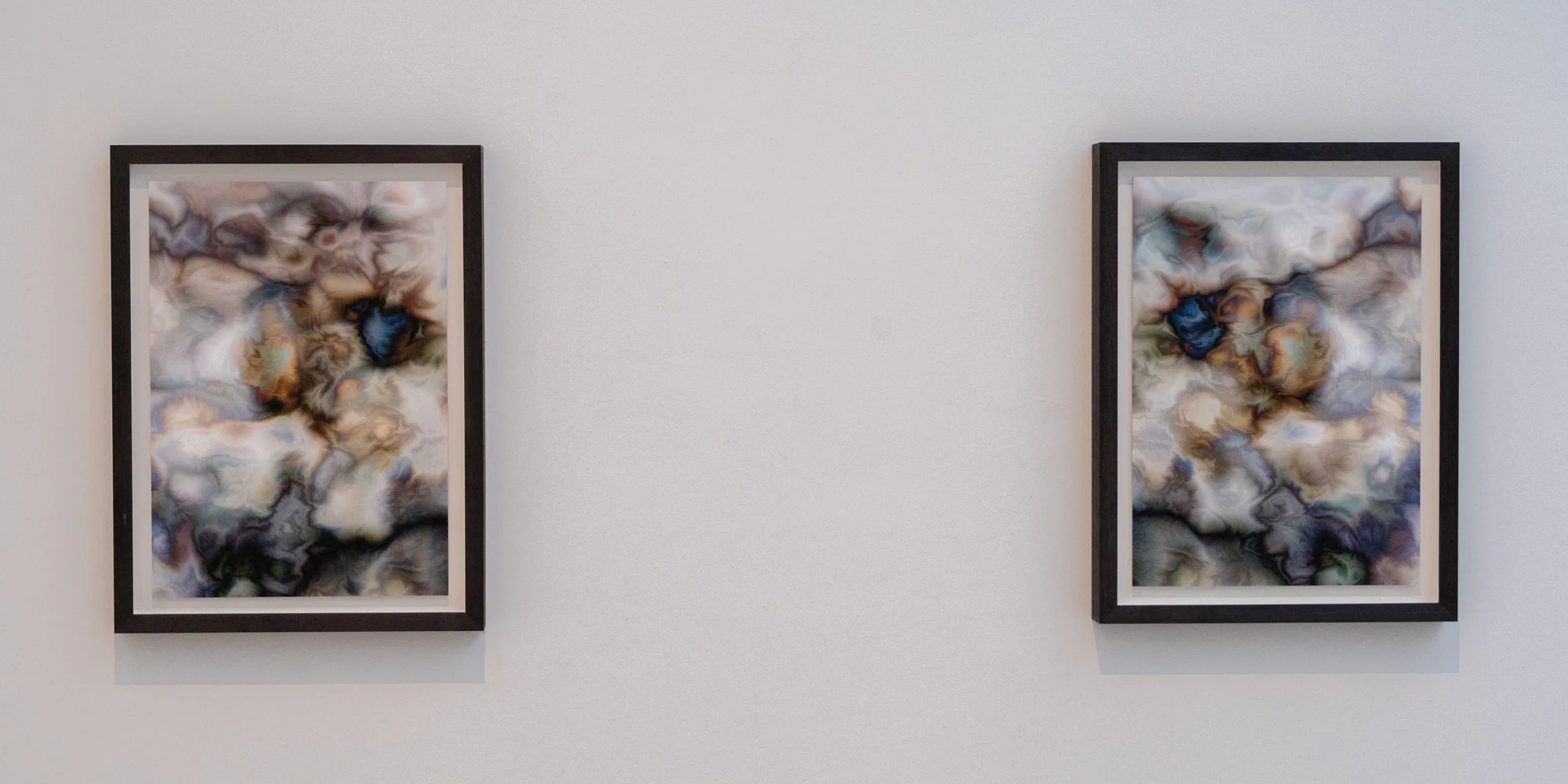
Some of the extracted images more explicitly evoke rubbing, wear, polishing and downier materials, or come closer to more traditional tools.
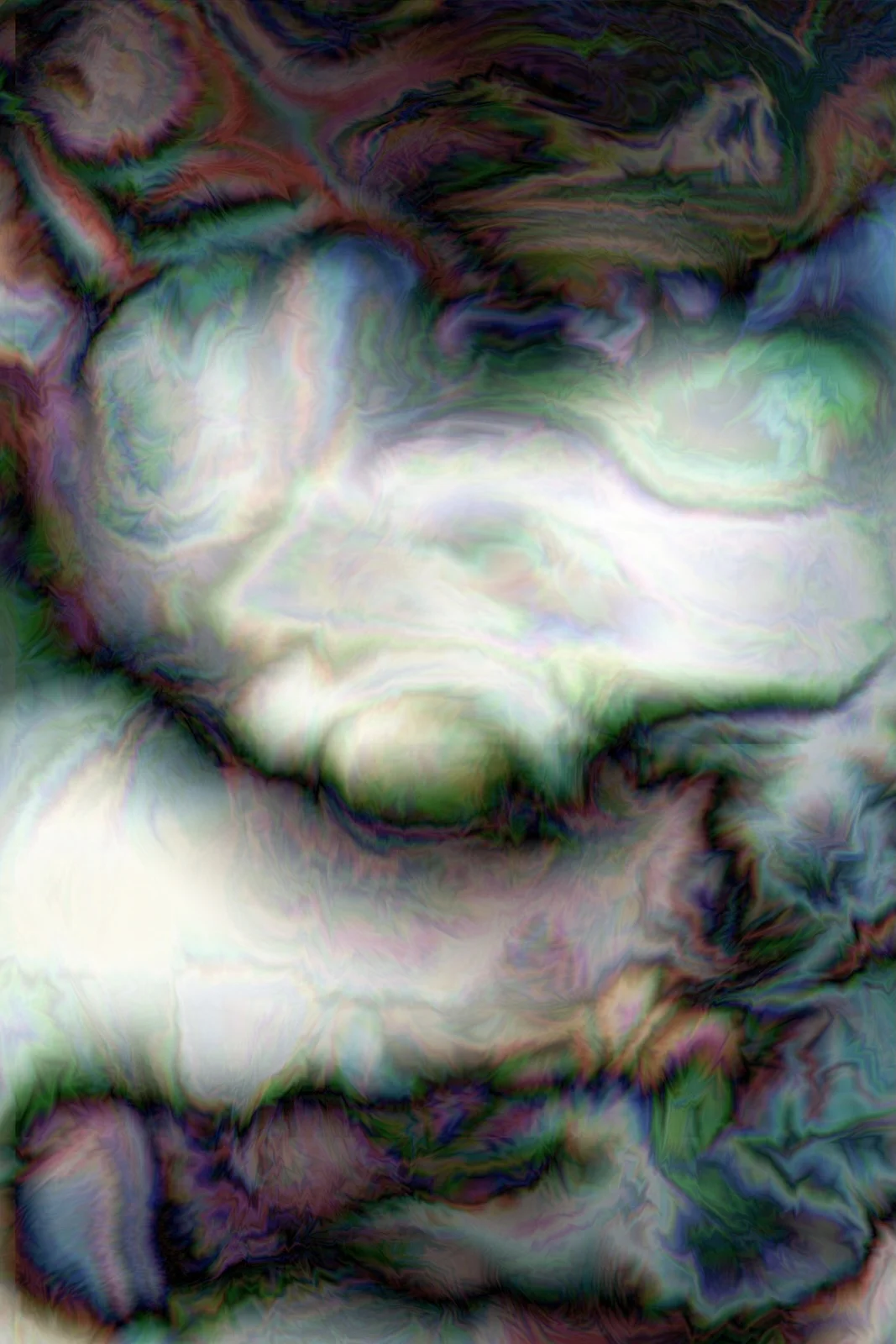
To work on this more finely, for some images I added an extra stage of processing the tones and the different value ranges of the images. The image below is an example.
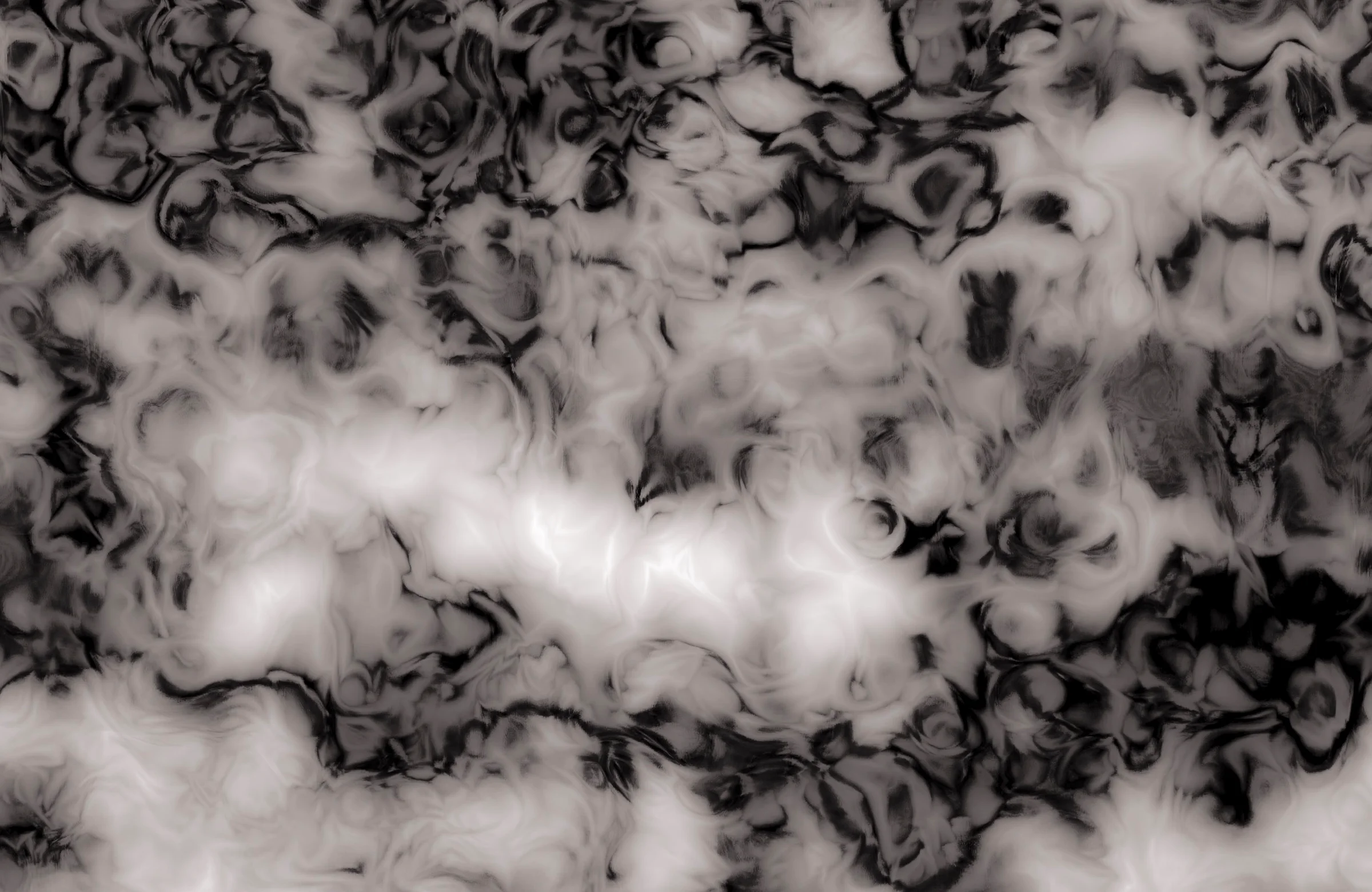
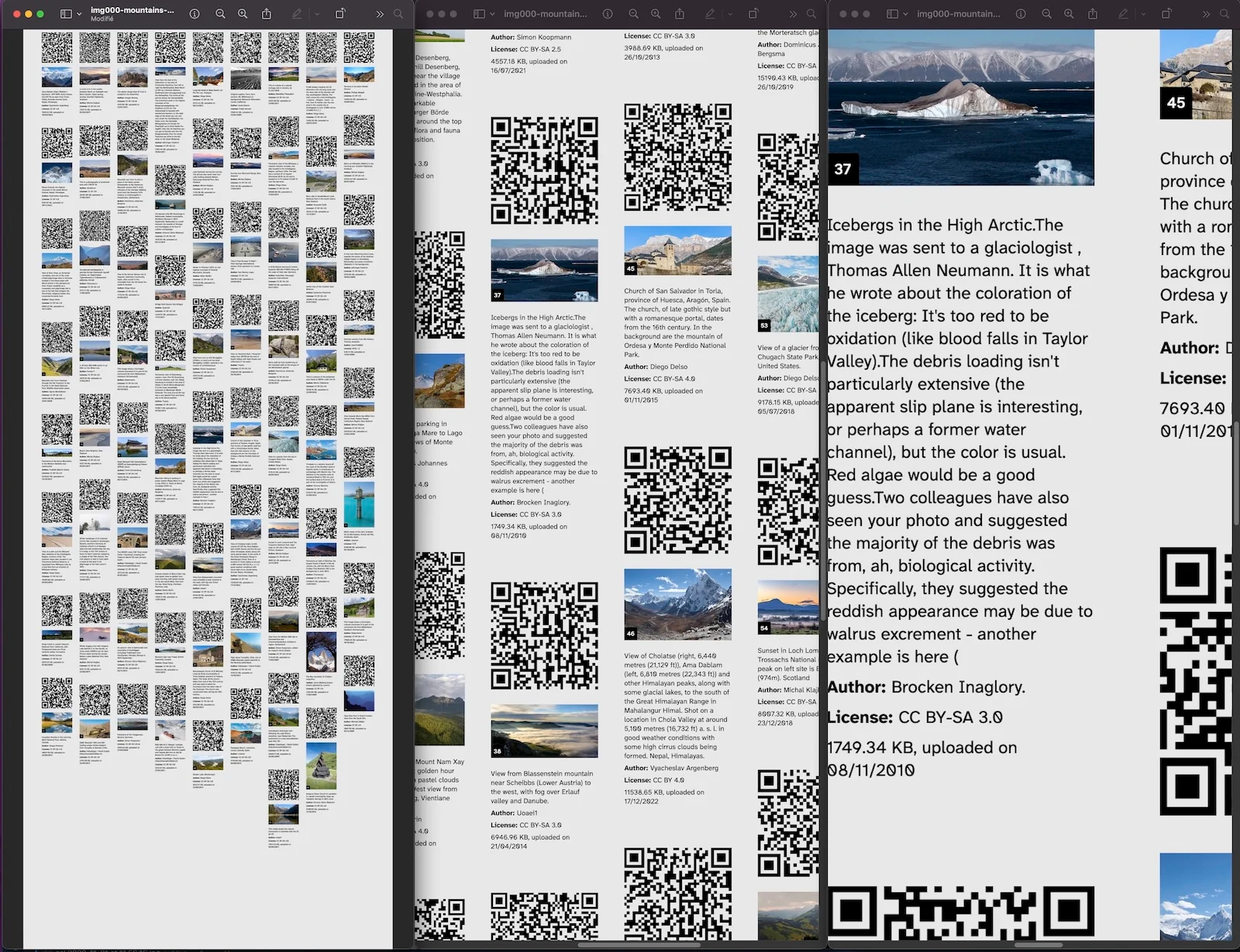
Originally, the images were worked on “blind”, by changing variable values directly in the code, before moving on to a MIDI interface that let me adjust them with potentiometers calibrated for each filter. Today the images are manipulated through a custom interface that no longer needs an external controller.
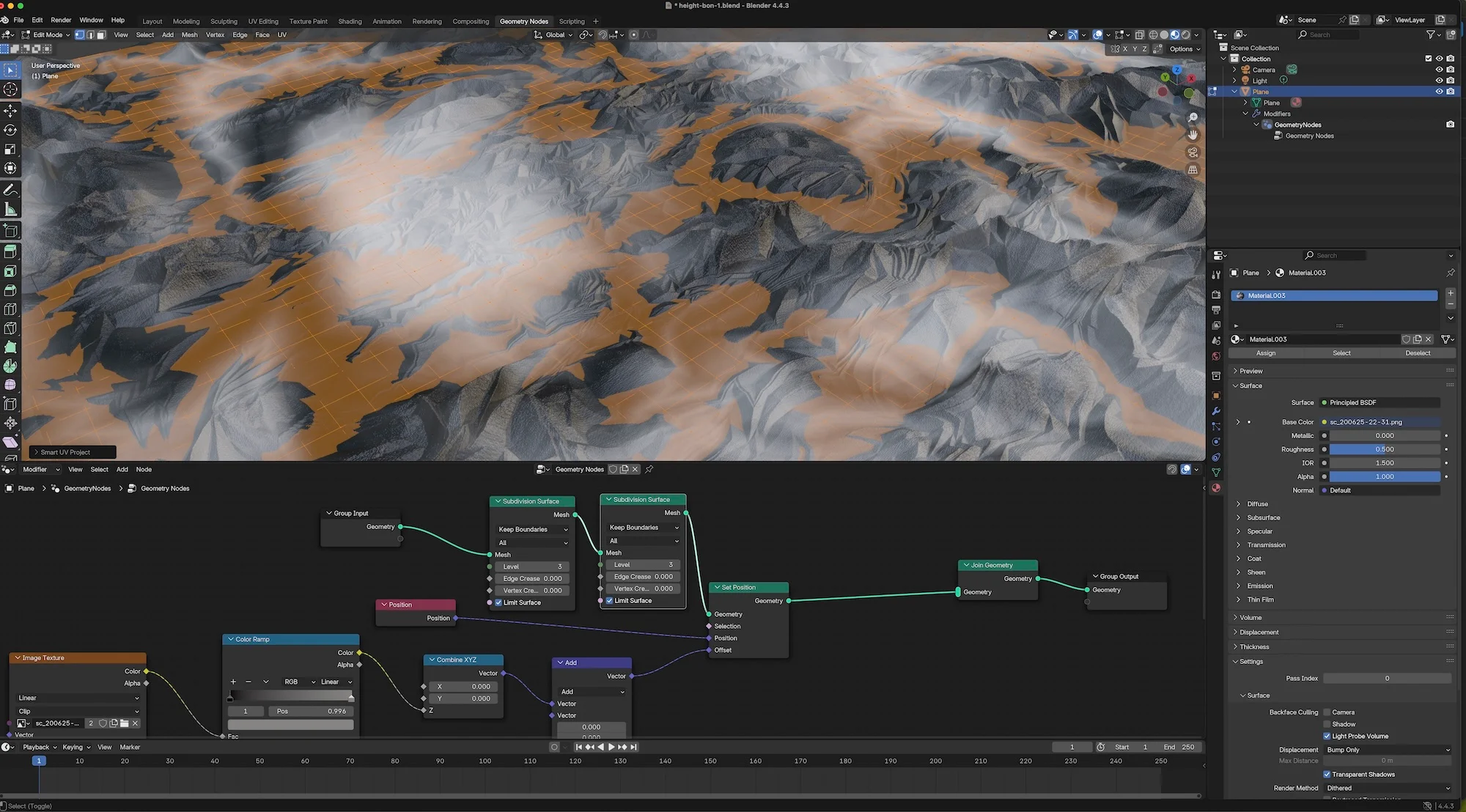
One of the project’s main limitations was the resolution of the captures, which were necessarily mapped to the dimensions of the browser window, and therefore of the screen. That pushed me to find other ways of generating files large enough for large-format prints, without resorting to AI (which would have altered the material and textures of the image, however slightly).
So I turned to testing tools and headless browsers (which run without rendering an interface), making it possible to create windows unrelated to the size of the screen. Most of the files generated today exceed 100,000,000 pixels, natively.